Find Treatment By
Rehabs by Location


Find Treatment By
Learn
About Us
Recovery.com combines independent research with expert guidance on addiction and mental health treatment. Our mission is to help everyone find the best path to recovery through the most comprehensive, helpful network of treatment providers worldwide.
Advisory Council
Our advisory council brings together leaders in behavioral health, technology, and business. Their diverse expertise ensures our resources and product are innovative, evidence-based, and effective. They guide our mission as accomplished individuals dedicated to improving the landscape of addiction recovery and mental wellness.
Ketamine Overdose: Signs, Symptoms & Treatment

The editorial staff of Recovery.com is comprised of addiction content experts. Our editors and medical reviewers have over a decade of cumulative experience in medical content editing and have reviewed thousands of pages for accuracy and relevance.

Dr. Scot Thomas received his medical degree from the University of California, San Diego School of Medicine. During his medical studies, Dr. Thomas saw firsthand the multitude of lives impacted by struggles with substance abuse and addiction, motivating him to seek a clinical psychiatry preceptorship at the San Diego VA Hospital’s Inpatient Alcohol and Drug Treatment Program.

The editorial staff of Recovery.com is comprised of addiction content experts. Our editors and medical reviewers have over a decade of cumulative experience in medical content editing and have reviewed thousands of pages for accuracy and relevance.
Dr. Scot Thomas received his medical degree from the University of California, San Diego School of Medicine. During his medical studies, Dr. Thomas saw firsthand the multitude of lives impacted by struggles with substance abuse and addiction, motivating him to seek a clinical psychiatry preceptorship at the San Diego VA Hospital’s Inpatient Alcohol and Drug Treatment Program.
Can You Overdose on Ketamine?
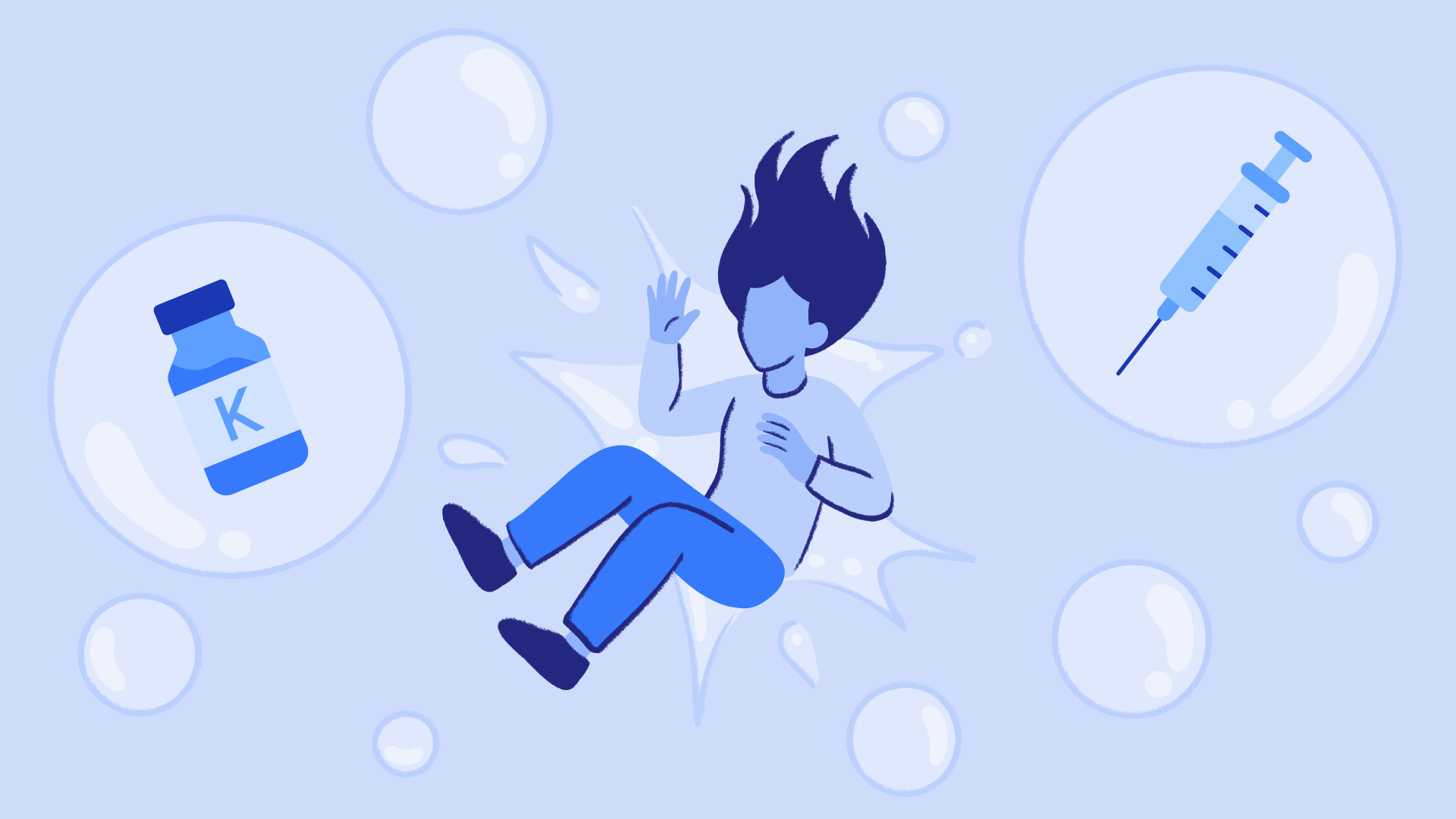
Yes, you can overdose on ketamine. Ketamine (Special K, Kit Kat, Cat Valium) is a dissociative anesthetic drug that is primarily used by veterinarians but is also abused recreationally.1 It produces a feeling of detachment from one’s surroundings, changes in perception, numbness, and hallucinations.2, 3
Users who take high doses of ketamine can overdose and can even die if ketamine is combined with alcohol or other central nervous system depressants.3, 4
Ketamine Overdose Symptoms
- Memory loss.
- Changes in blood pressure, heart rate, breathing, and body temperature.
- Panic and anxiety.
- Paranoia.
- Hallucinations.
- Delirium.
- Feelings of invulnerability and strength.
- Aggression.
- Seizures.
- Convulsions.
- Coma.
If you believe you or someone you know has overdosed on ketamine, call 911 immediately.
Have the following information ready for the dispatcher, if possible:
- The person’s age, weight, and condition.
- When the person ingested ketamine, and how much.
- Whether the person took other drugs with ketamine.
Ketamine Overdose Treatment
Treatment for a ketamine overdose usually includes removing sensory stimulation and putting the person in a quiet, calm environment. A medical professional may administer benzodiazepines for aggression and agitation and monitor cardiac and respiratory symptoms.1, 5
Most people who overdose on ketamine alone improve quickly and do not require hospitalization.5
Can You Die From a Ketamine Overdose?
Death from overdosing on ketamine alone is rare. But severe overdoses can lead to death from respiratory arrest.6
Most deaths involve the co-ingestion of other substances such as alcohol, opioids, amphetamines, and cocaine.
In the United Kingdom, only 4 of 23 deaths involving ketamine between 1993 and 2006 were due to ketamine alone. In New York City, 12 of the 15 non-hospital deaths that involved ketamine between 1997 and 1999 were multi-substance overdoses, and 2 died from trauma.5
Physical Injury
A major risk with ketamine overdose is physical harm. Users often have reduced awareness of their surroundings, increased aggression, impaired coordination, and altered perception of their own strength, pain, and abilities. Therefore, they may engage in activities, such as jumping off buildings, without realizing the risk of serious injury.5
Recovering From an Overdose
Users who suffer a ketamine overdose should seek some form of substance abuse treatment to prevent future overdoses and other consequences of abuse. Ketamine addiction can lead to serious long-term effects, including:5
- Impaired working memory.
- Schizophrenia-type symptoms.
- Psychological dependence.
- Lower urinary tract problems.
- Abdominal pain.
In addition, many ketamine users struggle with polydrug abuse or other addictions and may have mental health disorders that can benefit from therapy and medication.
Many facilities provide classes on addiction education and relapse prevention.
Options for recovering from ketamine overdose and addiction include:
- Inpatient or residential programs provide intensive treatment for addiction that includes detox, individual and group therapy, aftercare planning, and in some cases, alternative and holistic therapies such as yoga and meditation. Most stays are 28 days to 90 days, and luxury and executive options are also available.
- Outpatient rehab programs can encompass a range of options from weekly individual or group therapy sessions to intensive or partial hospitalization programs that offer medical supervision and several hours of addiction education or treatment multiple days of the week.
- Support groups, including 12-Step programs, which are abstinence-based programs in which users surrender to a higher power and admit powerlessness over their addiction. Narcotics Anonymous is a 12-Step program for people in recovery. Non-12-Step programs are also available in many communities.
- Dual diagnosis rehab facilities focus on people who have a substance abuse problem and a co-occurring mental health disorder. People who do not receive treatment for both disorders may be at higher risk of relapse.
Treatment may include:
- Detox: After you or your loved one has been admitted to the facility, it may be necessary to go through a detoxification process. Detoxification helps to control cravings and address any medical complications to arise during ketamine withdrawal.
- Relapse prevention: One of the goals of attending a recovery center is to develop the skills to stay sober and clean once you leave the program. Services can help you cope with the temptation to use again. For instance, you may learn how to develop activities and hobbies that will foster abstinence.
- Treating underlying conditions: Addiction can be a very personal issue. For this reason, it is important to seek out a facility that will work with you or your loved one to uncover the reasons that may have led to ketamine addiction. This may include attending counseling or therapy sessions.
- Addiction education: Many recovery facilities provide educational classes that teach patients how addictions develop and what they can do to avoid addiction in the future. This can be accomplished in both one-on-one and group settings.
Find a Recovery Center
If you or someone you love is struggling with ketamine use, help is available. Use Recovery.com to search, compare, and connect with treatment providers, and find a rehab program that fits your needs. Getting support now can make a difference in your safety and long-term recovery.
FAQs
-
National Institute on Drug Abuse (2014). Club Drugs (GHB, Ketamine, and Rohypnol). https://www.drugabuse.gov/sites/default/files/drugfacts_clubdrugs_12_2014.pdf
-
Drug Enforcement Administration (2013). Ketamine. https://www.deadiversion.usdoj.gov/drug_chem_info/ketamine.pdf
-
National Institute on Drug Abuse (2015). What Are the Common Effects of Dissociative Drugs on the Brain and Body?. https://www.drugabuse.gov/publications/research-reports/hallucinogens-dissociative-drugs/what-are-effects-common-dissociative-drugs-brain-body
-
Drug Enforcement Administration. Drug Fact Sheet: Ketamine. https://www.dea.gov/druginfo/drug_data_sheets/Ketamine.pdf
-
Kalsi, S., Wood, D., and Dargan, P. (2011). The epidemiology and patterns of acute and chronic toxicity associated with recreational ketamine use. Emerging Health Threats 4. https://www.ncbi.nlm.nih.gov/pmc/articles/PMC3168228/
-
Drug Enforcement Administration. (2011). Drugs of Abuse. https://www.dea.gov/docs/drugs_of_abuse_2011.pdf
















Our Promise
How Is Recovery.com Different?
We believe everyone deserves access to accurate, unbiased information about mental health and recovery. That's why we have a comprehensive set of treatment providers and don't charge for inclusion. Any center that meets our criteria can list for free. We do not and have never accepted fees for referring someone to a particular center. Providers who advertise with us must be verified by our Research Team and we clearly mark their status as advertisers.
Our goal is to help you choose the best path for your recovery. That begins with information you can trust.